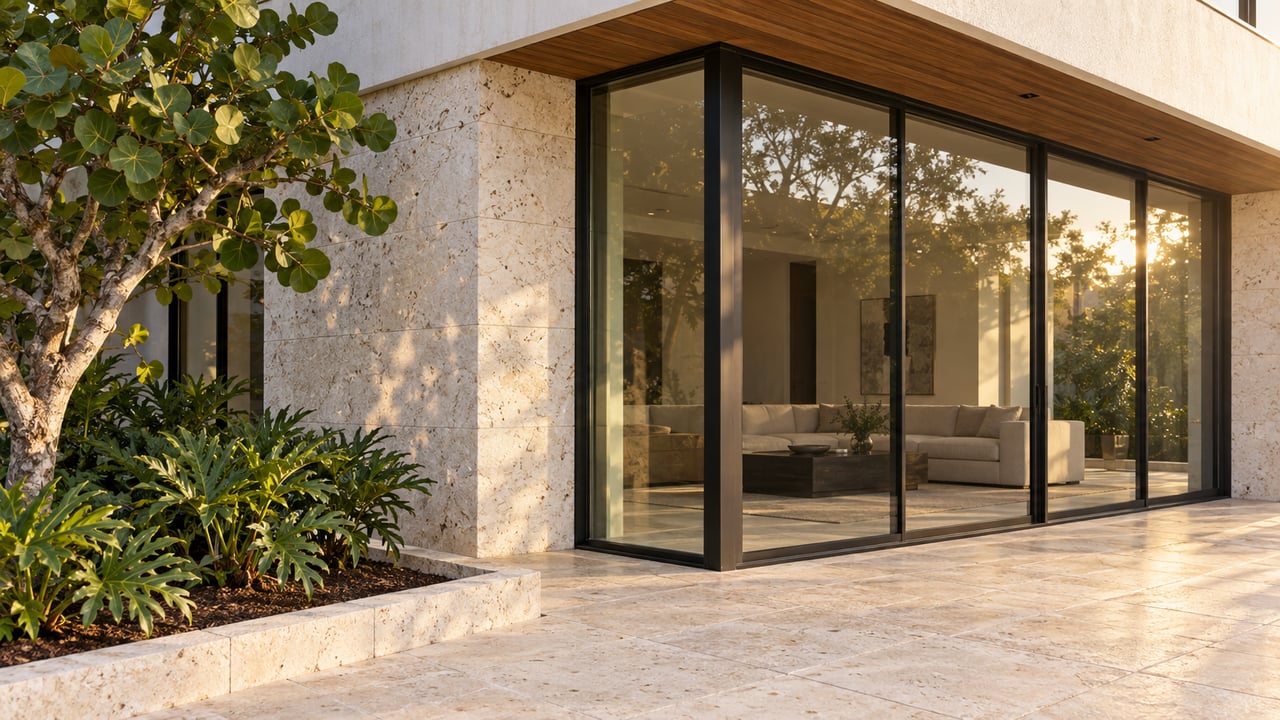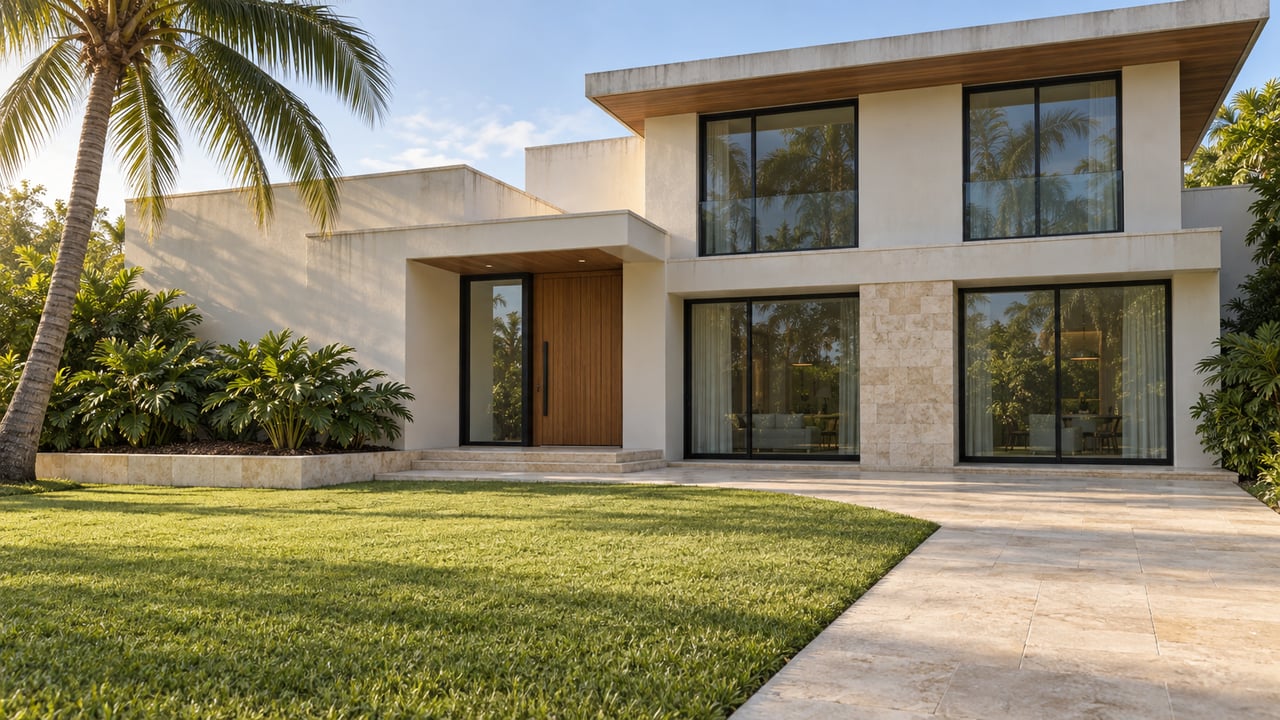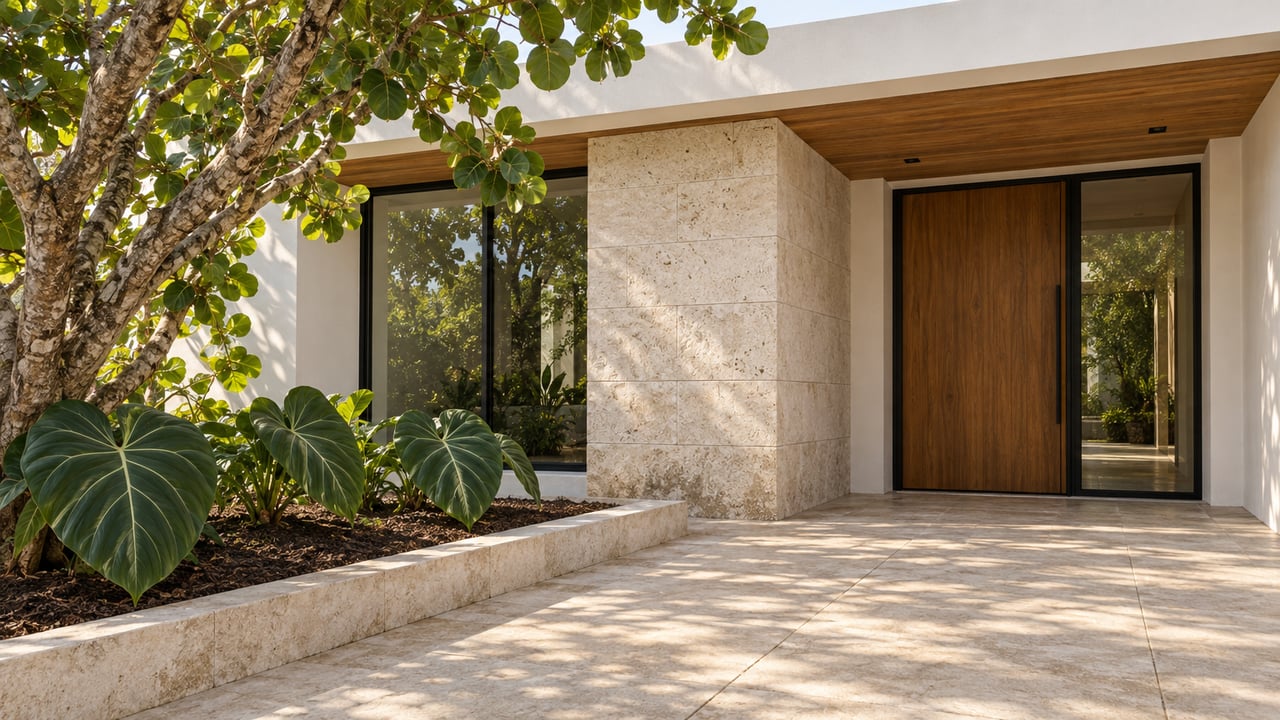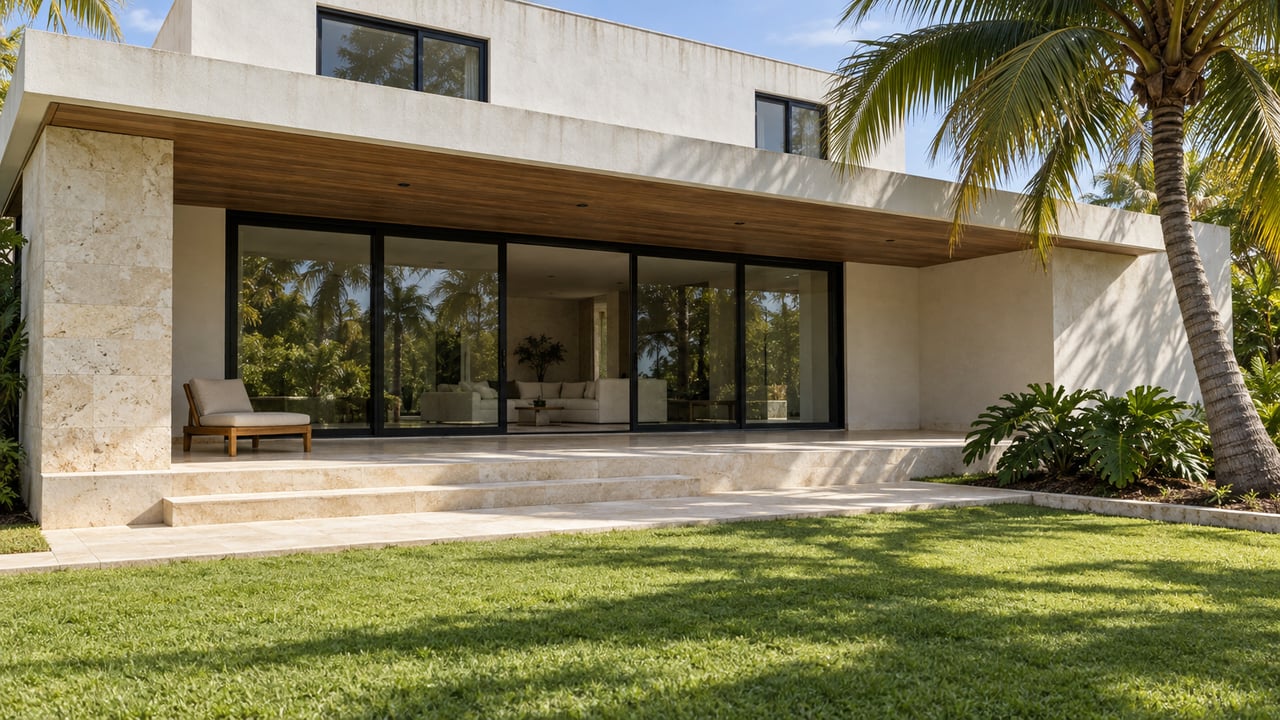
A Puerto Rico home purchase ends with a public deed signed before a notary and filed with the Property Registry. For anyone holding or seeking an Act 60 Resident Individual Investor decree, the name on that deed now carries a date-dependent rule. The Department of Economic Development and Commerce says that for applications filed on or after January 1, 2027, the decree residence must be held in full title, registered or pending registration with the Property Registry, "in the name of the individual, or jointly with the spouse, or in the name of a trust that is covered under Section 2022.07 of the Incentives Code (i.e., a grantor trust)."
Most coverage of Act 38-2026 has focused on the new 4% tax rate. For a buyer in Dorado Beach Resort & Club, the more immediate change is narrower. The application date now decides whether a Puerto Rico company can hold title to the home, and a decision made at the notary's table can follow the owner for the life of the decree.
The rule before 2027 already allowed more than one way to hold title
Act 60 has required a residence purchase since the code took effect in 2019. Section 6020.10(c) asks the investor to acquire title to Puerto Rico real property by purchase within two years after obtaining the decree, as sole owner or jointly with a spouse, from a seller fully unrelated to the investor. The investor must keep "exclusivo y completo dominio" of that home as a principal residence for as long as the decree lasts.
The Office of Incentives for Businesses explained how it reads that language in Circular Letter DDEC 2026-001, dated January 12, 2026. It recognizes four ways to buy from a non-related seller:
- As an individual and sole owner
- As an individual together with a spouse
- As an individual together with a partner in a relationship analogous to marriage
- Through a legal entity organized in Puerto Rico with a separate legal personality, provided the investor is its only owner, or the investor and spouse or analogous partner are its only owners
The third and fourth routes require a request to amend the decree, which the office may grant after reviewing all the circumstances. The letter defines "related person" using the Internal Revenue Code: a sibling, a spouse, or a lineal ascendant or descendant. It notes that the section says nothing about relatives by marriage.
Act 38-2026 drops the company option for new applicants
Act 38-2026 keeps the 2019 wording and adds one sentence. For an applicant who files on or after January 1, 2027, the evidence of compliance must show full title to the principal residence "inscrita, o pendiente de inscripción" in the Property Registry in the investor's name, jointly with a spouse, or in the name of a trust described in Section 2022.07. Kevane Grant Thornton's March 20, 2026 tax alert describes the effect plainly. The change "significantly impacts tax planning alternatives" because it does not allow the primary residence to be owned through a legal entity such as a limited liability company.
Side by side, the two regimes look like this:
| Applications filed through Dec. 31, 2026 | Applications filed Jan. 1, 2027 or later | |
|---|---|---|
| Purchase window | Within two years after the decree | Within two years after the decree |
| Seller | Unrelated person or company | Unrelated person or company |
| Who may hold title | Individual, jointly with spouse, jointly with an analogous partner with decree amendment, or a Puerto Rico entity owned only by the investor, or only by the investor and spouse or analogous partner, with decree amendment | Individual, jointly with spouse, or a Section 2022.07 grantor trust |
| Registry evidence | Ownership shown in annual reports | Title registered, or deed filed and pending registration |
| Rate on interest, dividends and post-residency gains | 0% | 4% |
| Decree term | Through Dec. 31, 2035 | Through Dec. 31, 2055 |
The 2027 ownership sentence names the individual, the spouse and the trust. It does not mention the analogous-partner route described in the January circular letter, and the materials reviewed for this post do not say how the office will handle that case for 2027 filers.
The date that controls the deed is the application time stamp
According to DDEC's Informative Bulletin 2026-004, dated April 24, 2026, an application received by 11:59 p.m. on December 31, 2026, as shown by the filing-fee time stamp on the Incentives Portal, keeps "the primary residential property acquisition rules in effect prior to the amendments," whatever the date the decree is later approved. The same bulletin says approved decrees and applications filed before January 1, 2027 "may still acquire the primary residential property through an eligible legal entity organized in Puerto Rico."
This matters for buyers in Dorado Beach because of how the two dates relate. The home can close up to two years after the decree is issued. Someone who files in December 2026 and closes on a Dorado Beach East residence in 2028 is still governed by the pre-2027 title rules. Someone who files in January 2027 and closes the same month is governed by the new ones. The closing date does not decide which rules apply. The application date does.
Existing decree holders face a sequencing question
Act 38-2026 says rights and obligations acquired under earlier Act 22 and Act 60 decrees "continuarán siendo honrados." Current holders may ask to extend their decrees to December 31, 2055, and DDEC says such a request can be filed at any time up to December 31, 2035. An approved extension brings the 4% rate starting January 1 of the year the request is filed.
The bulletin also ties the extension to the deed. A current holder who requests the 2055 extension and has not yet both acquired the primary residence and reported it in the annual report for the year of purchase "shall become subject to the limitation imposed under Section 6020.10(c)." As the bulletin reads, the order of events decides which title options remain. A holder who buys through a qualifying Puerto Rico entity and reports the purchase before seeking an extension is in a different position from one who seeks the extension while still house hunting.
Corrections to how the rule has been reported
Several things in the 2026 news cycle have been described as new when they are not:
- The two-year purchase window. The Weekly Journal's report on the signing describes buying a primary residence within two years of decree approval as an additional requirement. The same two-year language appears in the 2019 text of Section 6020.10(c).
- A minimum home value. Neither the original nor the amended section sets one.
- Leasing. The statute describes acquiring title by purchase. It does not describe a lease as a way to comply.
How the rule applies to Dorado Beach property types
Dorado Beach Resort & Club includes completed estates, branded condominium-hotel phases and homesites. Each meets the residence rule at a different point.
Branded residences. El Nuevo Día reported in May 2026 that PRISA Group and Paulson Puerto Rico were opening sales in new phases of their beachfront resort residences. It identified West Point III as PRISA's newest Ritz-Carlton Reserve-branded condohotel phase at Dorado Beach. The report did not give a delivery schedule. For a 2027 applicant, the evidence the rule looks for is a deed filed with the Registry, so it matters when that filing takes place relative to the two-year window.
Estate residences. At La Cala, Ritz-Carlton Reserve Residences, PRISA Group was marketing 13 residences from $33.5 million to $40.5 million as of August 2026. Those are asking prices. The first La Cala sale closed October 1, 2025 at $40 million, and El Nuevo Día reported that it matched Puerto Rico's sale record. On August 28, 2026, the paper reported another La Cala closing, the second-highest sale ever recorded in PRISA's Dorado Beach project, and said 2026 had seen several ultra-luxury sales above $5 million. The accessible article text does not give that sale's price. At these prices, how title is held is usually a planning decision. For applications filed from 2027 on, the company route is no longer available for the decree home.
Homesites. The Incentives Regulation allows a land purchase followed by construction. The evidence must show the home finished within two years after the decree is issued, and that period can be extended by two more years for just cause on request. For someone building a custom home in the community, the construction schedule and the decree calendar run together.
These sales are far above the island-wide market. Stellar MLS's September 2026 Puerto Rico snapshot, with data as of October 6, 2026, shows 200 homes sold, $124 million in total volume and a median sale price of $337,500. That snapshot covers only sales reported through Stellar MLS. No local reporting found for this post measures whether buyers are hurrying to file before the December 31 cutoff.
What happens after closing
The title requirement continues after the purchase. Under Circular Letter 2026-001, if the shares, a majority interest or the ownership interest in a home-holding entity is transferred to another person or entity, the investor must file evidence of another Puerto Rico residence, bought directly or through another qualifying entity, with that year's annual report. When a decree requires it, the annual report also includes a certification of title and principal-residence status. This can be a letter signed under penalty of perjury, supported by the principal-residence tax exemption certification from the Centro de Recaudación de Ingresos Municipales. A homeowner who later sells the house or restructures ownership of the entity is making a change the incentives office will review.
FAQ
Does Act 38-2026 change anything for someone who already holds a decree and owns a home through a Puerto Rico LLC? DDEC says approved decrees are not subject to the new title limitation. Requesting a 2055 extension changes the rate to 4%, and it applies the new title rule to holders who had not yet bought and reported their residence.
Can an applicant with a pending application choose the newer terms? Yes. A pending applicant can file a sworn supplement asking for the 4% rate and a decree running to 2055, which means giving up the 0% rate. DDEC says the 0% rate and the 2055 term cannot be combined in one decree.
Has anything replaced the April 2026 bulletin? None of the sources reviewed for this post show a later DDEC instrument changing the residence rule. The summary above reflects Bulletin 2026-004 as issued on April 24, 2026.
This post explains how the rules read. It is not tax or legal advice, and title decisions belong with your tax counsel and notary. If you are weighing a Dorado Beach residence against a decree application, Troyer & Co can help line up your purchase timeline, the property type you are considering and the closing date before you sign.